
The Anatomy of a Breakpoint
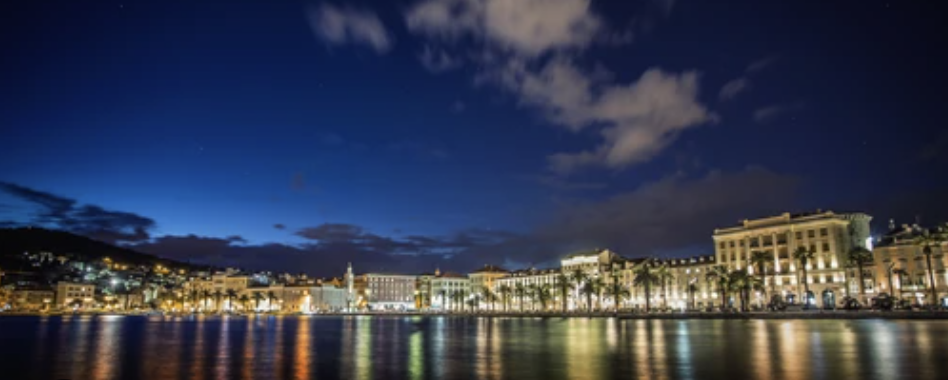
It was Sunday, July 26. To anyone else, it was the peak of the Mediterranean summer, a sun-bleached paradise where the Adriatic lapped gently against the Riva promenade. But to me, the encroaching dusk brought a familiar, cold dread. I was already fearing a night on the streets.
This wasn't uncharted territory for me. I had already spent nights under the open sky in Brussels, shivering against the damp northern air, and in Vienna, watching the grand imperial facades turn indifferent in the dead of night. I knew what it meant to be unanchored, to have the safety net of four walls stripped away in a foreign city. But as the shadows lengthened across the coast of Croatia, a suffocating certainty settled over me: this felt entirely different.
The heavy, paralyzing nature of this panic was not born from the immediate logistics of travel; its roots reached back several years into a profound, unspeakable tragedy. Ever since my son died, a part of my reality had remained permanently shattered. I had spent years suffering mostly in silence, constructing a complex architecture of psychological defense mechanisms to hide my severe panic attacks from the rest of the world. But carrying the crushing gravity of that grief in total isolation took an immense toll, triggering deep, cyclical bouts of depression. As I stood in Split, the silent mask I had worn for years was finally beginning to disintegrate under its own immense weight.
The crisis did not arrive all at once; it was built piece by piece from a series of compounding tactical failures. The first was entirely physical. Beneath my left foot, a massive blister—nurtured by miles of relentless walking on unforgiving European asphalt—had finally burst. With every single step, a sharp, searing pain shot straight up my leg, completely dismantling my gait and draining my physical stamina with terrifying speed.
The second failure was the dead weight I carried. In an attempt to prepare for every worst-case scenario, I had critically over-packed. I was burdened by three massive bags, their straps digging deep into my shoulders and throwing off my balance. Every ounce of fabric and gear felt like a deliberate anchor dragging me down into the stone streets.
As the dense, suffocating summer heat stubbornly refused to break, the final variable fell into place. The unfamiliar, maze-like grid of the coastal city began to twist in on itself. The landmarks blurred. The street signs became unreadable. The logistics had utterly failed, the physical pain was agonizing, and in the worst possible moment, I realized the truth: I was completely lost.
Driven by sheer exhaustion, my body finally forced a halt. Through the haze of pain, I managed to find a secluded bus shelter—a fragile oasis of plastic and metal tucked away from the main thoroughfares. I eased my weight onto the narrow, plastic-covered metal seat, deliberately ignoring the sharp, protesting ache in my back. The weight of the three bags dropped to the ground, and the world went dark.
I am not sure how long I was asleep. Time lost all meaning in that concrete alcove. But the peace of oblivion was instantly shattered the moment my eyes snapped open.
There was no gentle transition back to reality. Instead, I woke directly into a waking nightmare, immediately beginning to hallucinate as a full-on, catastrophic panic attack seized my entire body. The quiet Split night distorted. The shadows warped against the streetlights, and a suffocating paranoia took root. I felt under immediate, profound threat. A heavy, toxic certainty settled over my chest: I could not trust anyone. Every distant footstep, every rustle of the Mediterranean breeze, felt like an approaching predator.
Then came the strangest, most unshakeable delusion. Somewhere deep in my fractured consciousness, my mind latched onto a desperate objective. I became consumed by the absolute, irrational feeling that I must reach and cross the Belgium border. Thousands of miles away, Belgium represented safety, a psychological sanctuary that my panicked brain demanded I reach on foot, right then, from the coast of Croatia.
Driven by this terrifying imperative, I forced my broken body back into motion. I began the arduous task of walking along the foreign streets, propelled entirely by adrenaline and dread.
The three heavy bags once again anchored my shoulders, and the burst blister on my left foot screamed with every step, but the physical agony was entirely eclipsed by the psychological terror. I moved like a ghost through the Croatian night. I walked quietly, keeping my head down, constantly ducking in and out of the deep shadows cast by the stone buildings to avoid detection by imaginary threats.
My mouth was completely dry, pasty and parched from dehydration and fear. The beautiful coastal city of Split had entirely vanished, replaced by a hostile labyrinth. I could no longer recognize the streets, the sea, or the architecture. Fear was the only thing I recognized.
The walking became an endless loop, a desperate attempt to forge an identity out of a fracturing reality. I was a man entirely trapped in a world that no longer made sense, a ghost navigating a beautiful, hostile maze. Every step was an effort to anchor myself to something real, to remember who I was, yet the harder I tried to piece my mind together, the further the edges frayed. The white stone walls of Split seemed to absorb my history, leaving me as nothing more than a moving target in the dark.
Desperate for a momentary reprieve, I pressed my body hard against a cold stone wall, trying to catch my shallow breath. But there was no safety in the structure. Suddenly, a violent, kinetic jolt struck the center of my back—the unmistakable, scratching panic of a street rat scrambling across my spine. The visceral horror of it shattered my paralysis, generating a sudden surge of adrenaline that propelled me forward, throwing me back into the open, exposed streets.
Hysteria took over completely. Spurred by the shock, I ran until my lungs burned, eventually spilling out onto a slightly wider roadway where the headlights of a solitary vehicle cut through the gloom. It was a taxi. Blind to the danger but desperate for a human anchor, I stepped into the road and flagged it down. The car screeched to a halt.
I scrambled inside, dragging my heavy bags, my chest heaving as I bombarded the driver with frantic, breathless questions. "Where are we? What zone are we in? Can I trust you?"
The driver did not look at me with anger or suspicion. Instead, he showed an unexpected, profound patience. Turning around in his seat, his eyes softened as he kept asking, "Are you okay? Sir, are you okay?"
My mind, still trapped in its defensive loops, began to invent explanations for the trauma my body was feeling. I blurted out that I had been attacked, rambling that someone had hit me over the head. The physical pain of the burst blister and the emotional bruising of the night had translated into a literal narrative of violence in my mind.
The driver listened quietly, then asked a simple, grounding question: "Do you have a phone?"
The words caught me completely off guard. The concept of a cell phone felt totally foreign, an artifact from a life I could barely recall. The question seemed to surprise me, but mechanically, my hands began to fumble through my pockets until my fingers wrapped around the familiar cold glass and metal screen. I pulled it out, staring at it blankly.
Recognizing my paralysis, the driver gently reached back and guided me through the interface, helping me open my contacts list. As the screen illuminated my face, the scrolling text stopped. Two names appeared on the screen. The sight of them sent a sudden, agonizing shock of familiarity through the fog of my panic. They were anchors to the real world, faces and voices from a life where I wasn't hiding in the shadows of Croatia.
Independence has a breaking point, and vulnerability is not a failing.
Yet, the breakthrough was only temporary. Even with the phone in my hand and those familiar names staring back at me, the tether was too weak to pull me all the way back. My mind slipped right back into the current of the panic attack, and my disjointed ramblings continued, filling the quiet cabin of the taxi with a desperate stream of consciousness as the driver watched over me.
Ultimately, the brief sanctuary of the car could not hold me. The taxi driver did not take me with him. Perhaps the sheer depth of my confusion was too vast a chasm to cross in a single ride, or perhaps the logistical reality of a city night reasserted itself. But as I stepped back out into the suffocating humidity, his empathy left a lingering trace. He looked at me through the open window and promised that he would keep an eye out for me if he passed this way again. It was a small, fragile thread of human kindness offered to a man dissolving into the shadows, but it wasn't enough to stop the descent.
Left behind on the pavement, the weight of the three bags felt heavier than before, and the searing agony of my foot pinned me to the geography of my nightmare. The driver's taillights vanished, leaving me entirely exposed to the labyrinth once more.
A few endless hours later, the isolation reached an absolute, crushing peak. The delusion of the Belgian border had faded into a more terrifying reality: the total conviction that I was entirely trapped, permanently severed from the person I used to be. The panic attack had evolved from a temporary storm into a permanent climate.
With trembling hands, I raised the glowing phone to my ear. I chose a name from the screen—a dear friend, a soul who represented everything stable and good in a life that now felt light-years away. When the line connected, the distance between Split and home felt immeasurable.
I didn't offer explanations. I didn't recount the broken blister, the weight of the bags, or the shadows I had been ducking. Instead, I whispered a final, devastating truth as I understood it in that moment. I rang my dear friend simply to say goodbye.
The words came out thick, parched by fear and dehydration. I told them that I would never escape this night. I told them that the dark had finally won, that the maze of these white stone streets had swallowed me whole, and that there was no way back across the borders of my own mind. But beneath the absolute finality of the panic, a surge of profound gratitude broke through the terror. With what little voice I had left, I managed to say the most important words I could find: thank you for always being there.
When the call ended, the silence that rushed back in was absolute. I sank down against another unyielding stone curb, surrounded by my three over-packed bags—monuments to a misplaced need for self-reliance. The adrenaline that had fueled my phantom race to the Belgian border began to evaporate, leaving behind a cold, hollow vacuum. The internal trauma of that night wasn't just about being physically lost; it was the terrifying realization of how quickly the human mind can strip away its own armor when pushed past the brink. The fictitious head injury I had reported to the taxi driver was a manifestation of an internal fracturing, a desperate psychological cry to make sense of a pain that had no visible blood.
Slowly, almost imperceptibly, the oppressive black of the Dalmatian night began to soften into a bruised, slate gray. Dawn did not break with a dramatic flash, but with a gradual, exhausting unveiling of reality. The shadows that had twisted into hostile shapes dissolved back into ordinary street corners, closed shop shutters, and the indifferent facades of a historic town waking up to a routine Monday morning. The threats vanished, leaving behind only a severely dehydrated, broken traveler sitting amidst too much luggage.
Looking back now, with the benefit of time, distance, and a re-anchored psyche, the anatomy of that meltdown becomes glaringly clear. It was a perfect storm of cumulative vulnerabilities. The burst blister was a physical trigger, a localized agony that compromised my bodily stability. The three heavy bags were the physical manifestation of psychological baggage—an over-preparedness that borders on a refusal to trust the world, anchoring me to a punishing pace. When physical exhaustion met absolute isolation in a foreign tongue, the brain did what it always does under extreme survival pressure: it created a narrative, however distorted, to survive the threat. The fixation on Belgium was a desperate subconscious homing signal, a reach for a place where I had previously survived the open sky.
But to truly understand why I was on that curb in Split, one must look past the immediate physical breakdown and descend into the foundational landscape of my inner trauma. My panic attacks were not just random glitches; they were the echoing aftershocks of the day my life shattered permanently when my son passed away. A loss that profound completely rewires your reality. The heavy blanket of depression and the relentless choreography of masking my pain were the only ways I knew how to navigate a world that felt fundamentally altered.
This overwhelming trauma is the exact reason I launched The Write Track. This journey was never a standard vacation or a casual backpacking trip. It was a deliberate, structured odyssey born out of a profound necessity to reclaim my life from the shadow of my son's passing. For years, panic had been an invisible prison, dictating where I could go and how I could live. The Write Track was my manifestation of a refusal to stay defeated. The reason for this journey was simple yet radical: I decided to intentionally weaponize my writing and my travels to confront my mental health head-on. I chose to step directly into the environments that terrified me, tracking my psychological reactions in real time, transforming raw, terrifying trauma into a written narrative of survival.
This path required a raw, almost volatile fuel, and I found it in what I call Cedent-Power™. It is the rhythmic, relentless internal engine that drives me forward when logic tells me to collapse. Cedent-Power™ is the steady, unyielding beat of a heart that refuses to stop, the cadence of heavy boots marching through the dark, and the mechanical determination to keep moving, step after agonizing step. It is the fierce, industrial energy that tells me there is no option to freeze. On that long night in Split, even when my brain fell into deep hallucination and paranoia, it was Cedent-Power™ that kept my legs moving through the shadows instead of letting me curl up and give up on that unyielding stone.
Most importantly, that night was the ultimate test of my undying determination to push myself to the very limits of my panic attacks in order to control and beat them. I have realized that you cannot defeat a shadow by running from it; you defeat it by stepping entirely into its center, feeling its absolute maximum weight, and proving to your nervous system that you can survive the worst it has to throw at you. I didn't end up on the streets of Split by accident. I ended up there because my crusade against my own fear demanded that I test my boundaries. By pushing myself to the absolute edge—where the physical agony of a burst blister met the psychological terror of hallucination—I stripped the panic attack of its mystique. I looked it directly in its twisted, paranoid face, felt its absolute limits, and walked out the other side.
The definitive lesson carved out of the white stone of Split is that independence has a breaking point, and vulnerability is not a failing. Traveling alone exposes the fault lines we successfully conceal in our daily routines. To prevent a logistical failure from escalating into a mental health crisis, we must learn to lighten the load—both literally in the packs we carry and mentally in the expectations we place on our own resilience. But through the lenses of The Write Track and Cedent-Power™, that terrifying night wasn't a defeat. It was the crucible. I learned that a stranger's patience can be a lifeline, and a friend's distant voice can hold an identity together when it threatens to dissolve entirely. We do not survive the streets by pretending we cannot break; we survive by recognizing the shadows for what they are, trusting the anchors we have left, pushing our limits until the fear breaks instead of us, and allowing ourselves to step out of the maze.